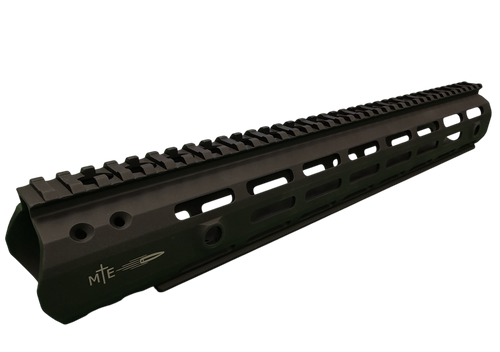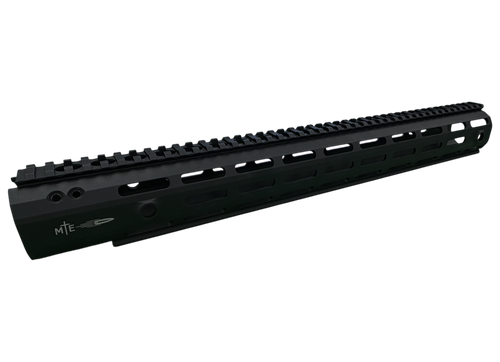
![No Shift AR-15 Frame ([Patent Pending ]Upper, Lower and Full Length ARCA Handguard)](https://cdn11.bigcommerce.com/s-iqfzfiv7pw/images/stencil/600x600/products/210/629/Coming_Soon__57492.1769290168.png?c=1 "No Shift AR-15 Frame ([Patent Pending ]Upper, Lower and Full Length ARCA Handguard)")
![No Shift AR-15 Frame ([Patent Pending ]Upper, Lower and Full Length ARCA Handguard)](https://cdn11.bigcommerce.com/s-iqfzfiv7pw/images/stencil/1280x1280/products/210/629/Coming_Soon__57492.1769290168.png?c=1 "No Shift AR-15 Frame ([Patent Pending ]Upper, Lower and Full Length ARCA Handguard)")
![No Shift AR-15 Frame ([Patent Pending ]Upper, Lower and Full Length ARCA Handguard)](https://cdn11.bigcommerce.com/s-iqfzfiv7pw/images/stencil/1280x1280/products/210/633/B2A3B2D5-6EB0-42E5-ABC0-EBDC04740F20__26074.1769297953.jpg?c=1 "No Shift AR-15 Frame ([Patent Pending ]Upper, Lower and Full Length ARCA Handguard)")
Product Overview
MTE NO SHIFT FRAME SET
Patent Pending
Projected Ship Date: October 1, 2026
Photos, complete test results, and videos are coming soon. Units may begin shipping earlier, but we have intentionally built in approximately a 30-day buffer for any unexpected production hiccups.
Engineering first. Marketing second.
The MTE No Shift Frame Set is the result of years of professional shooting, precision gas-gun competition, predator hunting, machining, testing, and one persistent question:
Why should the shooter have to compensate for a rifle changing its zero simply because the rifle is supported differently?
Traditional AR-style upper and handguard systems can introduce changes in barrel deflection as loads are applied through the bipod, barricade, tripod, or other support positions. On longer SPR-style barrels, the smallest elevation shift we have personally recorded was approximately 0.26 MRAD / 0.9 MOA, despite trying numerous conventional methods to reduce it. We have measured shifts approaching 0.5 MRAD / 1.7 MOA under other support conditions.
For years, being successful in PRS Gas Gun, Quantified Performance, The Gas Gun Show, or even tripod-based predator hunting meant learning the individual rifle's positional offsets.
Shooters had to know what happened when they moved from prone to a barricade, changed bipod position, loaded one bipod leg differently than the other, or transitioned onto a tripod. Even slight inconsistencies in how the rifle contacted a support could change where the barrel settled and ultimately where the bullet impacted.
The No Shift Frame Set was engineered specifically around eliminating that variable.
Rather than accepting support-induced barrel droop as an inherent characteristic of the platform, we approached the upper, lower, handguard, and structural load path as a complete system. Geometry, material selection, rigidity, component interfaces, and resistance to deformation were evaluated specifically around what happens when real-world forces are applied to the rifle—not simply how rigid the assembly feels on a workbench.
A key part of that system is the way the upper and lower discretely interlock with one another. Instead of treating them as two largely independent components joined only through a traditional receiver interface, the No Shift design allows the frame set to function more cohesively as a structural unit. The interlocking relationship is intentionally subtle from the outside, but it plays an important role in controlling movement and maintaining consistency throughout the platform.
Increased Rigidity. Increased Repeatability.
During our testing, we began noticing another result that we were not originally chasing.
Across barrels and configurations we have previously used, we have observed the same barrels shoot approximately 10–20% better on average when installed in the No Shift Frame configuration.
When you say it out loud, the explanation sounds almost obvious:
Hold the barrel in a more rigid and repeatable structure, and the barrel has a better opportunity to behave more rigidly and repeatably.
A barrel still has its own harmonic characteristics, ammunition still matters, and shooter fundamentals still matter. What we are doing is reducing another source of movement and inconsistency surrounding the barrel.
The goal was originally to prevent outside forces from changing the barrel's position when the rifle was loaded on a bipod, barricade, or tripod. What our testing has continued to show is that increasing the rigidity of the entire system may also allow the barrel to return and behave more consistently shot after shot.
We will be publishing the supporting groups, test methodology, and comparative results as testing continues.
The Result
We have tested the system from different bipod locations, barricade positions, and tripod-supported positions to evaluate how those loads influence the rifle.
The result is a frame system designed so that changing where or how the rifle is supported does not create the traditional point-of-impact shift caused by barrel droop and support loading.
That means moving from prone to a barricade, repositioning the bipod, or locking into a tripod no longer requires the shooter to automatically add an arbitrary 0.2–0.3 MRAD elevation correction or account for additional windage simply because the rifle is being supported differently.
That does not eliminate shooter fundamentals.
Just like a precision bolt rifle in a full chassis or stock, the shooter still has to build a square position behind the gun. Cheek pressure, shoulder pressure, recoil management, trigger control, and positional consistency still matter.
The difference is that the rifle itself is no longer adding another variable for the shooter to solve.
For the competitor, that means faster transitions and fewer positional offsets to memorize.
For the hunter, it means being able to zero from a conventional position and move onto a tripod without wondering how much the rifle's support system changed the point of impact.
For the precision shooter, it means greater confidence that the zero established on the rifle remains the zero you carry into the next position.
The MTE No Shift Frame Set was not designed around making an existing upper look different.
It was designed around changing how a precision gas gun behaves.
MTE No Shift — Engineering the shift out of the platform.
![No Shift AR-10 Frame (Upper, Lower [patent pending] and Full Length ARCA Handguard)](https://cdn11.bigcommerce.com/s-iqfzfiv7pw/images/stencil/500x659/products/211/630/Coming_Soon__57492.1769290168.1280.1280__95934.1769294411.png?c=1 "No Shift AR-10 Frame (Upper, Lower [patent pending] and Full Length ARCA Handguard)")